Where Have All the Big Ticket Aldi Finds Gone?

EDITOR’S NOTE: Like all posts on Aldi Reviewer, this piece is the opinion of its respective authors. Also like all posts, comments are welcome, although we ask readers to be mindful of our Community Guidelines.
On May 4th, 2022, Aldi stocked the most robust item it had ever sold. The Belavi Outdoor Rattan Sectional came with a couch, reversible lounger section, and coffee table. Incredibly, it did not come with instructions, a fact many of our commenters complained about.
The price tag? $449.99. It was one of the most expensive Aldi products we’d ever seen.
It also wasn’t the last. A month later, on June 15th, 2022, Aldi was set to sell another product at that exact same $449.99 price point: the Belavi Patio Egg Chair.

In this case, though, someone must have realized there was no way the chair would sell at that price, because the grocer did something else that was, in our experience, unprecedented: it cut the price on launch day.
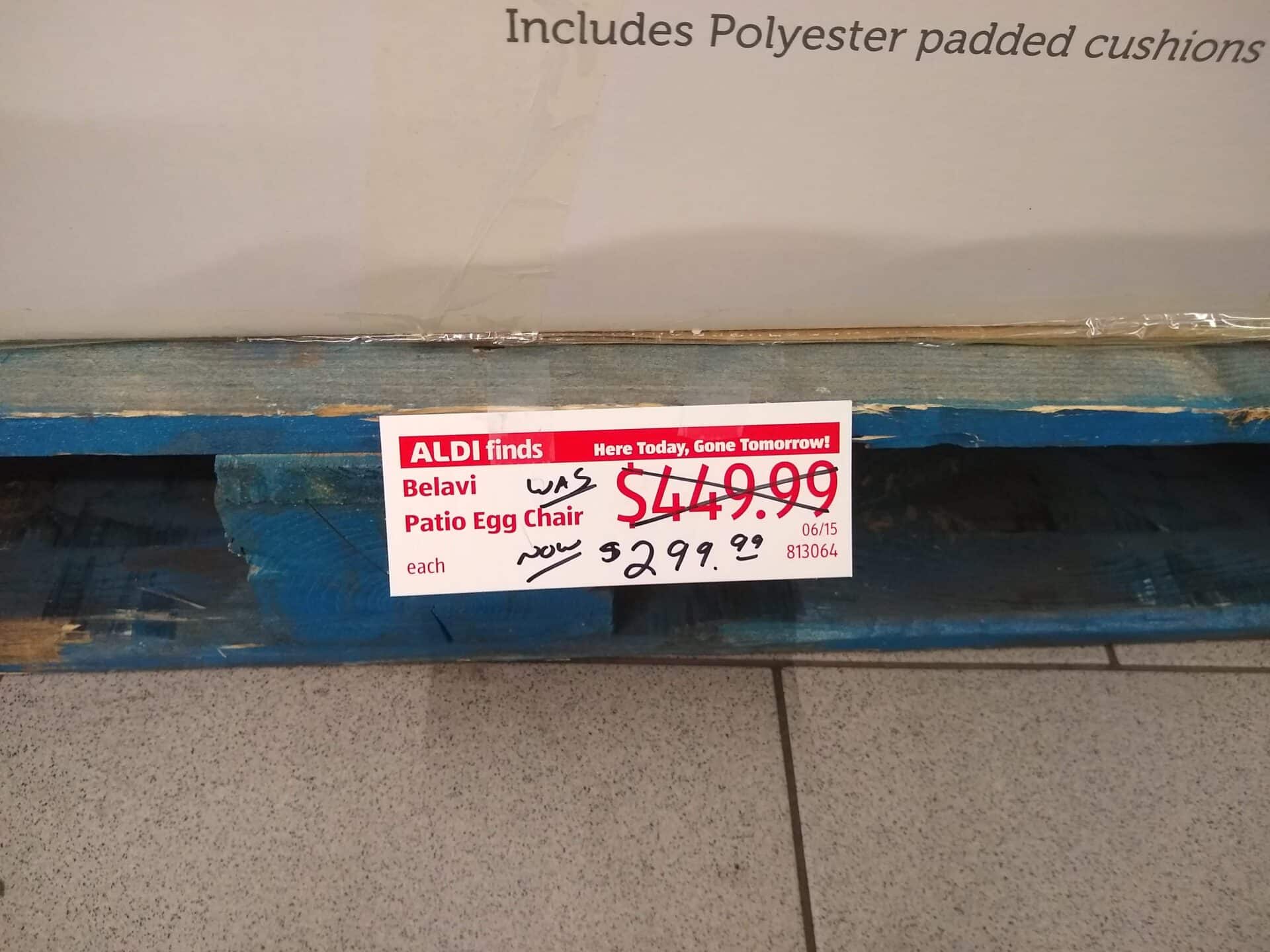
Even so, a $299.99 chair is no small ticket item, and we saw plenty of buzz over the deluxe outdoor seating option.
There was a time when Aldi shelved some truly big ticket Aldi Finds just like those. The real heyday of this trend came in 2021 and 2022, when Aldi sold an array of large products ranging from treadmills and fire pits to paddle boards and armchairs. But even before then, we’d seen a few truly deluxe limited buys. Aldi stocked futons from 2017-2019. Aldi sold a full-on 2000-watt gas-powered portable generator in 2018 for $349.99.
Before that, there was even a time when Aldi sold actual computers. In 2016, Aldi sold a desktop PC for $400 and a laptop for $500. That laptop, incidentally, is the most expensive product we’ve ever seen, even more impressive when you adjust for inflation, as it equates out to about $670 in 2025 dollars.
How things have changed.
In the month of August of 2025, the most expensive item was a $39.99 high velocity fan. In July of 2025, it was a $59.99 electric travel cooler. In June of 2025, it was a $69.99 projector screen. Fast forward to April of 2026, and it was a folding rocker and folding recliner selling for $49.99 each. And those were just monthly highlights — it’s not uncommon for Aldi Finds in a given week to cap out at under $20, with lots of small home goods like rugs, kitchen utensils, or decorative trinkets. To be sure, you will see the occasional Aldi Find over $100, like a portable A/C unit that sold for $169.99 in May 2025, but the era of the $200+ Aldi Find appears to be over, at least for now.
What happened?
A few things.
Post-Pandemic Consumer Behavior Changes
The COVID pandemic of 2020-2021 altered the fabric of society both in the United States and abroad. For months, the world pivoted to doing as much remotely as was possible. Life at home became more important than ever.
With travel and entertainment grinding to a halt, people spent more on luxuries that would make their home lives better and more comfortable. Home decor, home entertainment, and other home accessories became the top items. Retailers leaned into this, including Aldi.
As the pandemic slowly receded from view in 2021 and 2022, consumers were itching to get back to travel. The post-pandemic travel boom was real (we experienced it) and with all that money going to getting back to Disney World or the Smokies, they weren’t shopping for big home items in the same way.
That’s part of the reason you saw large Aldi Finds piling up in stores in the fall of 2022. A grocery insider once pointed out to us that if an Aldi Find doesn’t sell out within a couple of weeks, it’s considered a failure. By that standard, many of the big Aldi Finds of that time were just that.
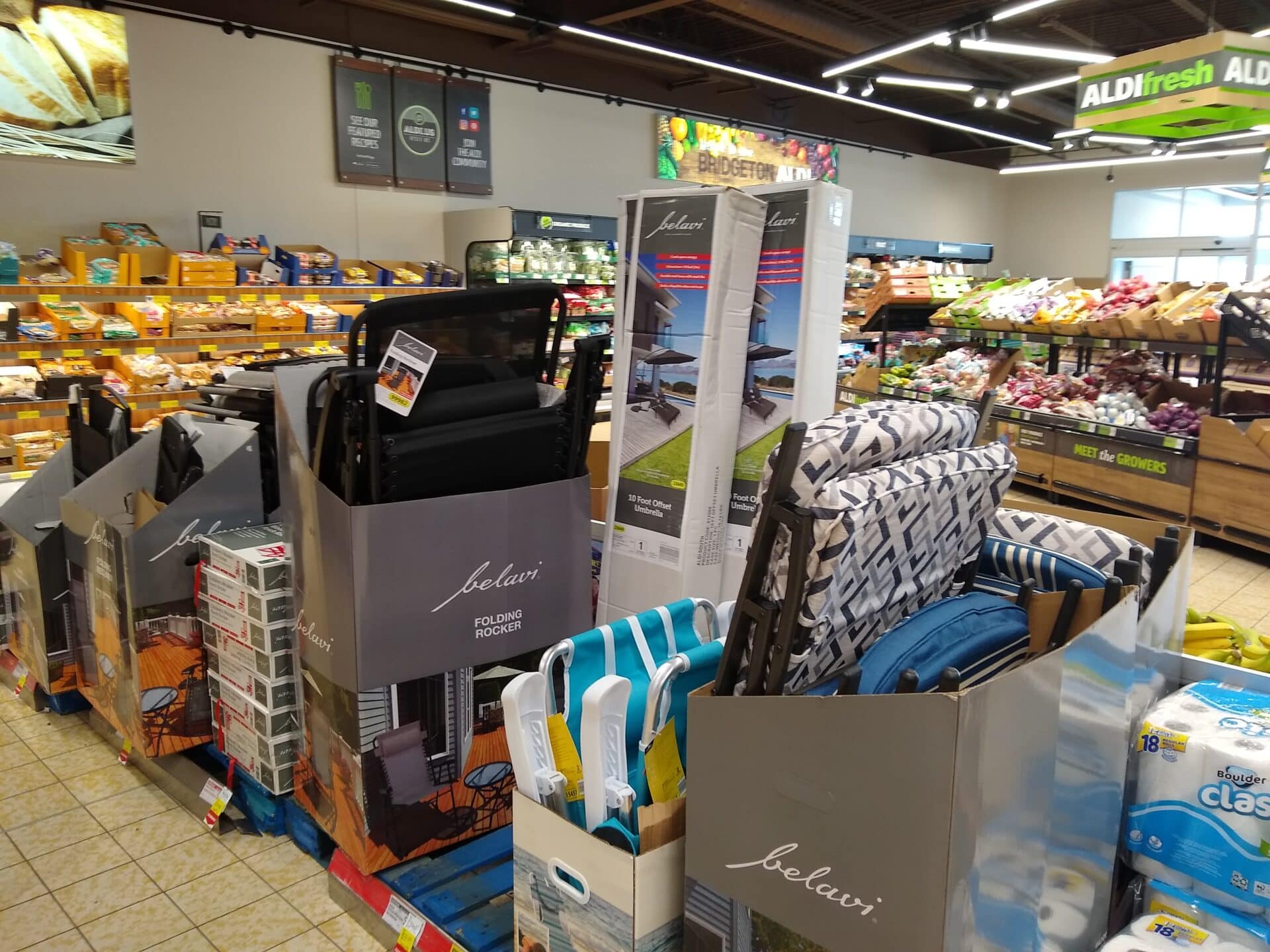
Aldi isn’t a company to watch failure happen over and over. The grocer adjusted its Finds to meet a changing consumer demand that didn’t involve high-dollar home goods.
Supply Chain Issues
Consumer behavior wasn’t the only thing the pandemic affected. Supply chains are what get products from factories to store shelves. They’re quite complicated, especially when you’re talking about getting something across the globe.
Demand for certain products slumped in 2020, and COVID also disrupted factories and transportation. As 2021 rolled around and demands shifted back, the supply chain wasn’t ready. While the delays were felt worst in places like automotive chips, delays crept into many consumer goods.
Aldi was one of many companies impacted. Aldi products, Finds especially, went through bouts of delays in 2021 and 2022. Some products scheduled to land in the summer were hitting shelves in the fall, while a handful of fall products didn’t stock until winter. That’s not what you want in an Aldi Find.
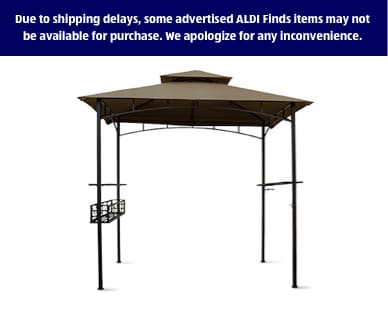
It was bad enough that consumer behavior was shifting, but now Aldi had products that weren’t getting to stores in the optimal time. It’s doubtful the grocer wanted to place bets on big ticket items in that kind of uncertainty.
Inflation
Inflation is when prices go up, and there’s no question that over the last few years, prices have gone up. Once again, the pandemic has played a role, as prices for many goods spiked in 2021 and 2022 as demand surged. Shoppers were certainly going to notice the creeping price of staples like milk and eggs, but imagine the potential sticker shock of some of your more expensive Aldi Finds going up even more. People tend to get more careful with their wallets when inflation is high, which is bad news for big-ticket luxuries.
It’s likely that the threat of rising prices led Aldi to back off contracting for larger Aldi Finds, as Aldi worried that they would be even harder to sell.
Tariffs
Tariffs are a tax on imports. In 2025, the Trump Administration imposed tariffs on a wide swath of countries, including China. Those tariffs have at times been in flux, going up and down, and that has created uncertainties about many of the things we’ve already talked about. Tariffs, for example, can drive up prices as companies pass along the tariff costs to consumers. Tariffs can also cut down on supplies if companies can’t afford to import and don’t have alternatives available.
Companies hate uncertainties, and the tariff situation presents a lot of uncertainties. In that climate, expensive Aldi Finds would pose a greater risk.
Closing Thoughts:

Aldi, like any successful company, follows consumer behavior. Consumers seem less interested now in expensive Aldi Finds, so the grocer has adapted. That, plus challenges like supply chains, inflation, and tariffs, have made it more difficult to stock the high-end Finds. You’ll still see the occasional item over $100, but it would seem that the time when you could get a giant sectional from the grocer has come and gone … at least for now.